Morocco Accessible Travel Guide
Yes, Morocco accessible travel is possible for many wheelchair users and travelers with reduced mobility, but the experience depends on the exact route, equipment, and support available. Historic medi
Morocco Accessible Travel Guide: Wheelchair-Friendly Cities, Hotels & Tours
Morocco is one of the most beautiful travel destinations in North Africa. From the colorful markets of Marrakech to the golden dunes of the Sahara Desert, this amazing country offers unforgettable experiences for every traveler.
But is Morocco accessible for wheelchair users and people with limited mobility?
Yes, Morocco accessible travel is possible for many wheelchair users and travelers with reduced mobility, but the experience depends on the exact route, equipment, and support available. Historic medinas, older accommodation, and public transport may have significant barriers, so never assume a location or vehicle is fully accessible without confirming its features.
Imagine exploring the famous streets of Marrakech, enjoying a traditional Moroccan meal, relaxing on the beaches of Agadir, or watching the sunset over the Sahara Desert.
With the help of experienced local guides and accessible travel services, many of these experiences can become part of your Moroccan adventure.
In this complete guide, you will learn about wheelchair accessible Morocco tours, the best cities to visit, accessible hotels, transportation options, and helpful tips for planning a safe and enjoyable vacation.
Whether you use a wheelchair, have limited mobility, or travel with someone who needs extra assistance, this guide will help you plan your dream trip to Morocco.
Is Morocco Wheelchair Accessible?
Morocco is becoming more welcoming to travelers with disabilities, but accessibility varies from one destination to another.
Modern cities such as Casablanca, Rabat, and Agadir have hotels, shopping centers, and tourist facilities that may offer wheelchair access.
However, Morocco is also famous for its historic medinas, traditional houses, and ancient streets.
These beautiful places often have narrow pathways, uneven surfaces, and stairs that can make wheelchair access difficult.
For example, the old medina of Fes is known for its narrow streets and traditional architecture. While it is an incredible place to visit, some areas may not be suitable for wheelchair users.
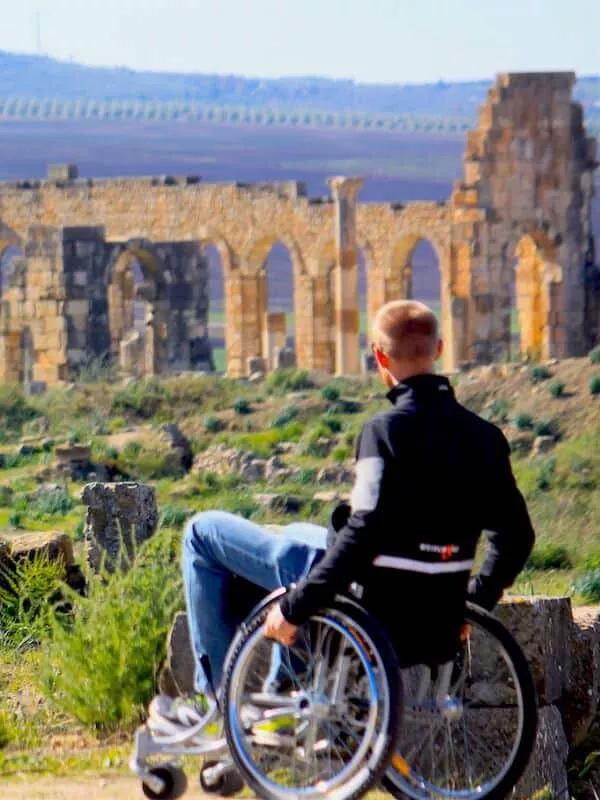
Fortunately, travelers can still enjoy many Moroccan attractions by choosing accessible routes and working with experienced local tour guides.
Planning ahead is the key to a successful accessible vacation in Morocco.
Before traveling, always confirm that your hotels, transportation, and planned activities meet your specific accessibility needs.
Best Cities for Accessible Travel in Morocco
Morocco has many exciting destinations, but some are easier to explore for travelers with mobility challenges.
Here are five cities to consider when planning your accessible Morocco itinerary. Accessibility varies even within the same city, so use this overview as a planning aid rather than a guarantee.
Quick Comparison: Accessible Travel in Morocco by City
| Destination | Potentially Easier Experiences | Main Mobility Challenges | Best Planning Approach |
|---|---|---|---|
| Marrakech | Modern districts, selected gardens and hotels | Medina crowds, uneven paving, steps | Pre-check each attraction and arrange a suitable vehicle |
| Casablanca | Modern hotels, some coastal promenades | Busy traffic, curb heights, variable venue access | Confirm routes from hotel to attractions |
| Rabat | Some modern streets and open-air sites | Sloped historic neighborhoods and irregular paving | Choose a low-barrier sightseeing route |
| Agadir | Resort areas and sections of seafront promenade | Sand, beach access, variable adapted facilities | Confirm beach equipment and hotel bathrooms |
| Fes | Selected viewpoints and guided stops | Steep, narrow medina passages | Plan short, carefully verified visits |
Important: These comparisons are general planning observations, not audited accessibility ratings. Contact each venue for current measurements and services.
1. Marrakech: Discover Morocco's Most Famous City
Marrakech is one of the most popular destinations for tourists visiting Morocco.
Known as the Red City, Marrakech is famous for its colorful souks, beautiful gardens, historic palaces, and lively atmosphere.
For wheelchair users, Marrakech offers both opportunities and challenges.
The modern neighborhoods of Gueliz and Hivernage have wider streets, international hotels, and restaurants that may be easier to access.
Some of the best places to explore include:
- Jardin Majorelle: A peaceful garden famous for its blue buildings, exotic plants, and beautiful walkways.
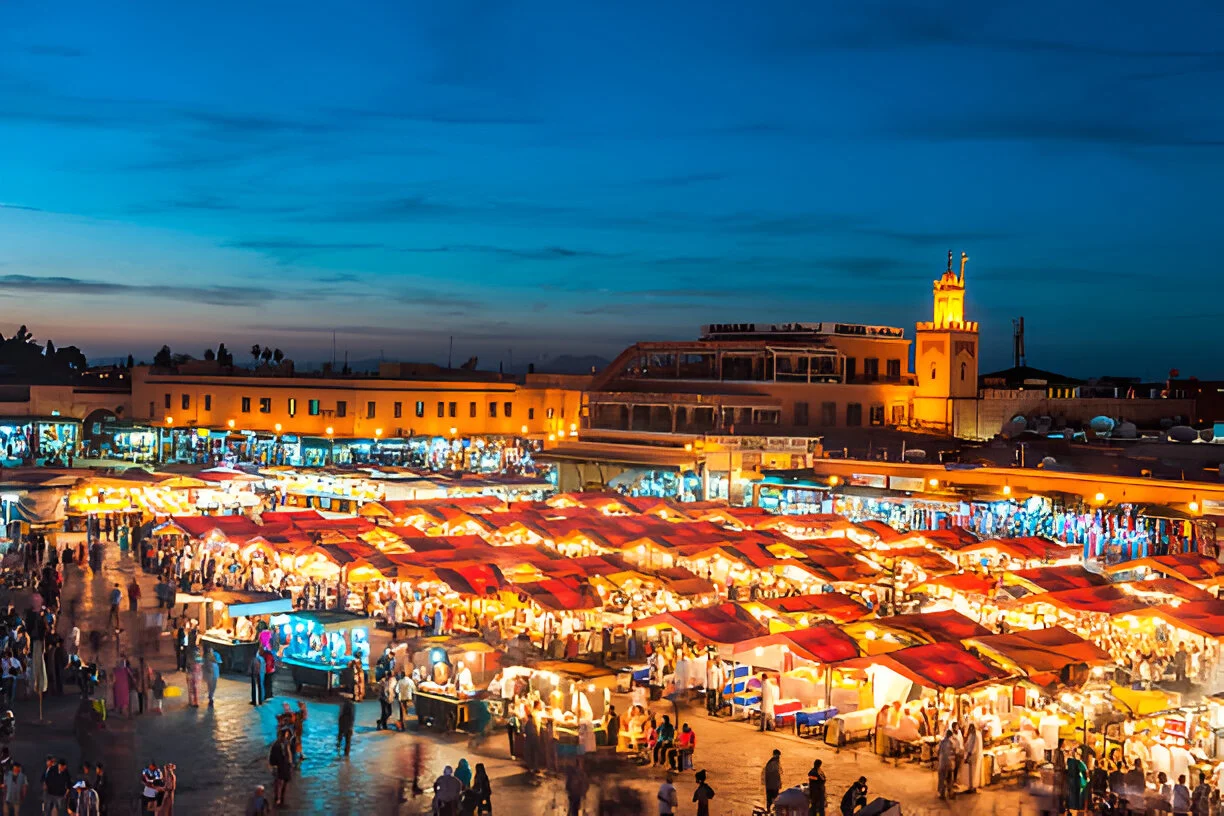
- Jemaa el-Fnaa Square: A lively public square where visitors can experience Moroccan culture, street entertainment, and traditional food.
- Bahia Palace: A historic palace featuring beautiful Moroccan design, although certain areas have steps and uneven floors.
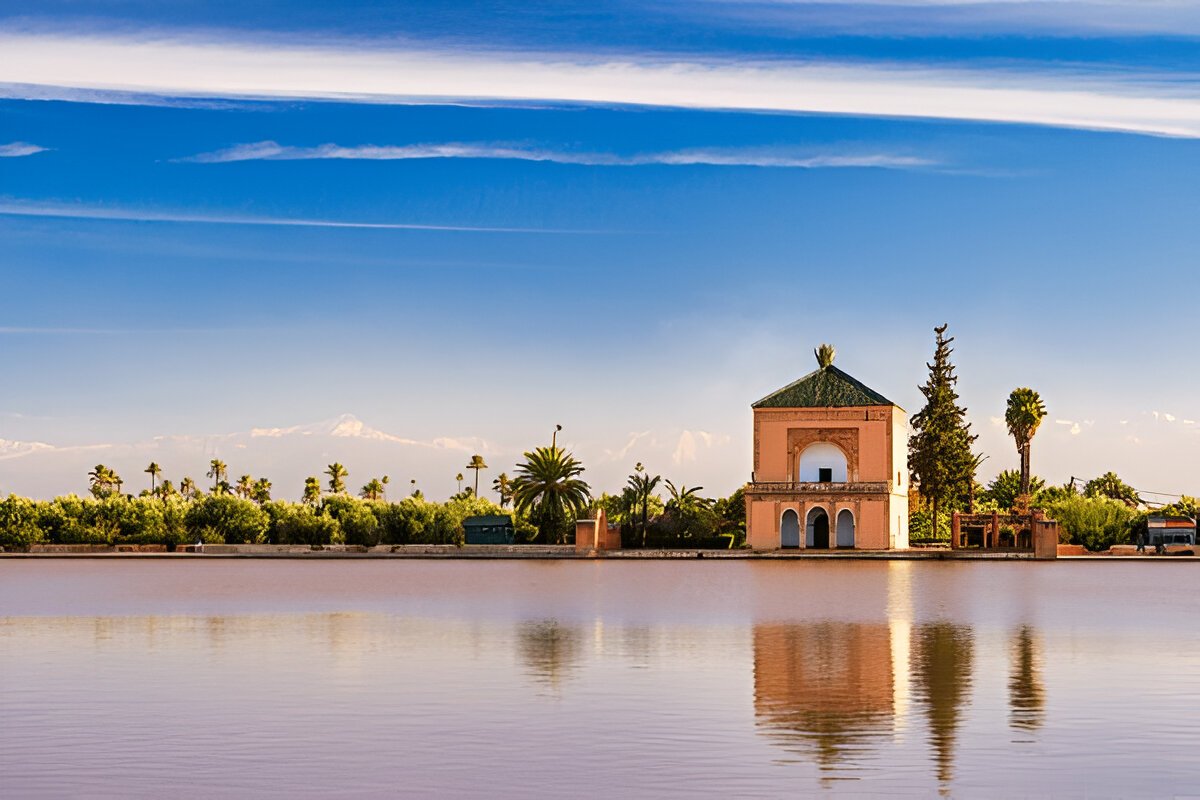
- Menara Gardens: A popular green space with mountain views and a historic water basin.
Not every part of these attractions is wheelchair accessible, so checking before visiting is important.
For a more comfortable experience, consider booking accessible Marrakech tours with a private guide who understands your mobility requirements.
2. Casablanca: Enjoy Modern Morocco
Casablanca is Morocco's largest city and one of its most modern destinations.
It is a great place to experience Moroccan culture while enjoying modern hotels, restaurants, and shopping centers.
Compared with older cities, some parts of Casablanca have wider roads and newer buildings.
One of the city's most famous attractions is the Hassan II Mosque.
This impressive mosque stands beside the Atlantic Ocean and features beautiful Moroccan architecture.
Some areas may be accessible to wheelchair users, but it is important to confirm visitor access before your trip.
You can also explore the Corniche, a popular coastal area filled with restaurants, cafes, and ocean views.
Casablanca can be a good starting point for Morocco tours for travelers with disabilities, especially when arriving through Mohammed V International Airport.
3. Rabat: Explore Morocco's Peaceful Capital
Rabat is the capital of Morocco and offers a wonderful combination of history, culture, and modern life.
The city is generally quieter than Marrakech and Fes, making it attractive to travelers who prefer a more relaxed vacation.
Some modern neighborhoods have wide sidewalks and comfortable hotels.
Popular attractions include Hassan Tower, the Mausoleum of Mohammed V, and the Kasbah of the Udayas.
The Hassan Tower area has open spaces where visitors can enjoy the historic surroundings.
However, some pathways and historic sites may have uneven surfaces.
The Kasbah of the Udayas is beautiful but can be difficult to explore with a wheelchair because of slopes and narrow streets.
With a carefully planned route, Rabat can be a rewarding destination for accessible sightseeing.
4. Agadir: Relax on Morocco's Beautiful Beaches
If you love sunshine, ocean views, and relaxing vacations, Agadir is an excellent destination to consider.
Located on Morocco's Atlantic coast, Agadir is famous for its long sandy beach, modern resorts, and pleasant weather.
Unlike many historic Moroccan cities, Agadir has newer tourist areas and a beachfront promenade.
Parts of the promenade may be suitable for wheelchair users and travelers with limited mobility.
Many large resorts also offer amenities that can make a beach vacation more comfortable.
However, not all beaches have wheelchair ramps or special beach equipment.
Before booking your vacation, ask your hotel about accessible beach entrances, swimming pools, and bathroom facilities.
For travelers looking for a relaxing wheelchair-friendly Morocco vacation, Agadir is worth considering.
5. Fes: Experience Morocco's Rich History
Fes is one of Morocco's oldest and most fascinating cities.
It is famous for its historic medina, traditional markets, beautiful architecture, and cultural heritage.
However, Fes can be challenging for wheelchair users.
The old medina contains narrow streets, uneven ground, and many areas that are difficult to access.
Travelers with limited mobility may prefer guided visits to selected attractions or scenic viewpoints outside the busiest parts of the medina.
A knowledgeable local guide can help you find easier routes and enjoy the city's history without unnecessary difficulties.
Accessible Transportation in Morocco
Transportation plays an important role in planning a comfortable trip.
While Morocco offers trains, buses, taxis, and private vehicles, not every transportation option is wheelchair accessible.
Airport Assistance in Morocco
Morocco has several international airports, including Marrakech Menara Airport, Casablanca Mohammed V International Airport, and Agadir Al Massira Airport.
Travelers who require wheelchair assistance should contact their airline before departure.
Airport assistance services can help passengers with boarding, airport navigation, and other mobility needs.
It is recommended to request assistance at least 48 hours before your flight.
If you travel with an electric wheelchair, provide your airline with information about its size, weight, and battery.
Private Wheelchair Accessible Transportation
For many travelers with disabilities, private transportation is the most convenient option.
A private driver can provide airport transfers, city tours, and transportation between Moroccan destinations.
However, wheelchair accessible vehicles in Morocco are limited, and not every private transfer company offers adapted vehicles.
If you need to stay in your wheelchair during transportation, confirm that the vehicle has a suitable ramp or lift and a proper wheelchair securement system.
Booking in advance gives you a better chance of finding transportation that meets your needs.
Trains and Public Transportation
Morocco has a railway network connecting major cities such as Casablanca, Rabat, Marrakech, and Fes.
Some trains and stations offer accessibility features, but availability varies.
Contact ONCF, Morocco's national railway operator, before booking to confirm accessible boarding and station assistance. ONCF's published conditions of sale describe a free boarding and disembarkation assistance service for people with reduced mobility, requested 48 hours in advance through stations or the customer relations center (2255). Check the latest conditions and suitability for your wheelchair before buying a ticket. Source: ONCF general conditions of sale.
Public buses and regular taxis may be difficult for wheelchair users, especially travelers who cannot transfer independently.
For a more comfortable experience, private transportation is often worth considering.
Wheelchair Accessible Hotels in Morocco
Choosing the right hotel can make a big difference during your trip.
Morocco offers a wide range of accommodations, including luxury resorts, modern hotels, and traditional Moroccan riads.
Some international hotels provide accessible rooms with features designed for guests with disabilities.
When booking your accommodation, look for these important facilities:
- Step-free hotel entrances and accessible pathways.
- Rooms with enough space for wheelchair movement.
- Bathrooms with grab bars and roll-in showers.
- Elevators large enough for wheelchairs.
- Accessible restaurants and common areas.
- Helpful staff who can explain available accessibility services.
When contacting a hotel, ask for actual doorway widths and whether there is a continuous step-free route from the entrance to your room, dining area, and other facilities. Ask whether a shower chair or hoist can be provided if needed.
Traditional Moroccan riads are beautiful places to stay, but many have stairs, narrow entrances, and small bathrooms.
If you prefer an authentic riad experience, contact the property directly and request detailed accessibility information.
It is also a good idea to ask for photos of the room, bathroom, and entrance.
Never assume a hotel is fully wheelchair accessible just because it advertises accessible accommodations.
Confirm that its facilities match your individual needs before making a reservation.
Can Wheelchair Users Visit the Sahara Desert?
Visiting the Sahara Desert is a dream for many travelers.
The endless golden dunes, peaceful desert atmosphere, and beautiful sunsets make it one of Morocco's most unforgettable destinations.
But can wheelchair users experience the Sahara?
Yes, some travelers can enjoy accessible Sahara Desert tours in Morocco with specialized planning.
Traditional desert excursions often involve camel rides, walking across sand, and staying in camps that may not have accessible facilities.
These activities can be difficult or impossible for some wheelchair users.
However, specialized tour companies may offer alternatives such as private 4×4 transportation, adapted itineraries, and desert accommodations with easier access.
Some desert experiences can be arranged near roads or firm ground, reducing the need to cross deep sand.
Before booking, ask about transportation, wheelchair transfers, bathrooms, sleeping arrangements, and access to the camp. A standard 4×4 is not necessarily wheelchair-accessible: confirm whether you can transfer safely, how the chair is stored, and whether a lift-equipped vehicle is needed.
Accessible desert facilities are not widely available, so careful research is essential.
A well-planned desert trip can still offer incredible views, Moroccan hospitality, and unforgettable memories.
Best Activities for Travelers With Disabilities in Morocco
Morocco has much more to offer than historic streets and desert adventures.
There are many cultural and relaxing activities that travelers with limited mobility can enjoy.
Enjoy Traditional Moroccan Food
Moroccan cuisine is famous around the world.
During your trip, try delicious dishes such as chicken tagine, couscous, harira soup, and traditional Moroccan pastries.
Many modern restaurants offer ground-floor seating, although accessible bathrooms are not always available.
You can also enjoy Moroccan mint tea while relaxing in a peaceful cafe.
Discover Beautiful Moroccan Gardens
Morocco is home to colorful gardens filled with flowers, palm trees, and traditional architecture.
Gardens such as Jardin Majorelle in Marrakech are popular attractions.
Some garden pathways may be manageable for wheelchairs, but conditions vary.
Checking accessibility before visiting will help you plan a comfortable experience.
Experience the Atlas Mountains
The Atlas Mountains offer some of Morocco's most beautiful landscapes.
Although many mountain hiking trails are not wheelchair accessible, visitors can still enjoy scenic drives, viewpoints, and selected villages.
A private tour allows you to travel at your own pace and choose stops that match your mobility needs.
Explore Moroccan Culture
Morocco's rich culture is one of the main reasons people visit.
You can discover traditional crafts, listen to Moroccan music, visit museums, and enjoy local food.
Choosing accessible venues and knowledgeable guides can make these cultural experiences easier to enjoy.
Best Time to Visit Morocco for Accessible Travel
Morocco is a year-round destination, but some seasons are more comfortable than others.
Spring, from March to May, and fall, from September to November, are generally excellent times to visit Morocco.
During these months, temperatures are usually pleasant for sightseeing in many popular destinations.
Summer can be very hot, especially in Marrakech and the Sahara Desert.
Extreme heat may be uncomfortable for travelers with certain medical conditions or mobility needs.
Winter is generally mild along the coast, although mountain regions can experience cold weather and snow.
If you want to explore several Moroccan cities, spring and fall often provide comfortable conditions for traveling.
Questions to Ask Before Booking an Accessible Morocco Tour
A tour described as accessible may only mean that the operator can adjust the itinerary. Send these questions in writing and request photos whenever possible:
- Vehicle: Can I remain seated in my wheelchair during the journey? Does the vehicle have a ramp or lift and an appropriate restraint system?
- Accommodation: What are the entrance, bedroom door, and bathroom door clear widths? Is there a roll-in shower and a suitable toilet transfer space?
- Transfers: Will anyone be expected to lift me manually? Is trained assistance or a hoist available if required?
- Itinerary: Which stops have steps, cobblestones, steep slopes, long distances, or unpaved terrain?
- Equipment: Is there secure storage or charging for a powered wheelchair? What happens if equipment fails?
- Contingencies: What alternative activities and refund arrangements apply if a location turns out to be inaccessible?
Keep the operator's replies with your booking confirmation. Needs differ significantly between manual-wheelchair users, powered-wheelchair users, and travelers who can transfer independently.
Sample 5-Day Morocco Accessible Travel Itinerary
This is a flexible example, not a verified step-free route. Every hotel, vehicle, restaurant, and attraction must be checked before booking.
| Day | Base | Suggested Experience | Accessibility Check |
|---|---|---|---|
| 1 | Marrakech | Airport arrival and relaxed evening in a modern district | Confirm airport assistance, vehicle and hotel entrance |
| 2 | Marrakech | Selected garden or cultural site with breaks | Verify paths, entry thresholds and restroom access |
| 3 | Marrakech | Scenic drive toward Atlas foothill viewpoints | Confirm vehicle transfer arrangements and safe stopping points |
| 4 | Marrakech | Low-pressure guided city activities | Agree on a route avoiding problematic steps and crowds |
| 5 | Marrakech | Departure | Reconfirm airport assistance and transfer |
For a multi-city trip, add extra travel days rather than assuming a transfer and full sightseeing schedule can comfortably fit into one day.
Helpful Tips for Planning Morocco Accessible Travel
A little preparation can make your Moroccan vacation much easier.
Here are some useful tips:
- Book accessible hotels early. Suitable rooms may be limited, especially during busy travel seasons.
- Arrange transportation in advance. Confirm that your vehicle meets your wheelchair and mobility requirements.
- Choose experienced local guides. Guides familiar with accessible tourism can help you avoid difficult routes.
- Check attraction accessibility. Contact museums, gardens, and historic sites before visiting.
- Bring essential medical supplies. Pack medications, wheelchair accessories, and necessary spare parts.
- Allow extra travel time. Avoid planning too many activities in one day.
- Purchase appropriate travel insurance. Make sure your policy covers your needs and mobility equipment.
- Prepare emergency contacts. Keep your hotel's information and important phone numbers available.
Travelers with electric wheelchairs should also check charging requirements and electrical compatibility before departure.
Why Book Private Accessible Morocco Tours?
Private tours can offer more flexibility than traditional group tours.
With a private tour, you can create an itinerary based on your interests, mobility needs, and preferred travel pace.
For example, you might spend two days exploring Marrakech, enjoy a scenic drive through the Atlas Mountains, and finish your vacation on the beaches of Agadir.
A local guide can help arrange suitable restaurants, attractions, and transportation.
You can also take breaks whenever needed without following a fixed group schedule.
However, not every company advertising accessible tours has specialized equipment.
Before booking, ask detailed questions about vehicles, accommodation, wheelchair assistance, and the accessibility of planned activities.
Choosing a tour operator with relevant experience can help you enjoy a smoother and more comfortable vacation.
Useful Official Resource
For train journeys, check ONCF Voyages and request assistance in advance. For flights, confirm wheelchair handling and assistance directly with the operating airline and relevant airport. Accessibility details can change, so current written confirmation is more useful than a general description on a booking website.
Frequently Asked Questions About Morocco Accessible Travel
Is Morocco a good destination for wheelchair users?
Morocco can be a rewarding destination for wheelchair users who plan carefully. Modern hotels and selected attractions offer accessibility features, but historic areas can present challenges.
Are there wheelchair accessible tours in Morocco?
Yes, some travel companies organize wheelchair accessible Morocco tours. Services vary, so confirm transportation, accommodations, and activity accessibility before booking.
Is Marrakech wheelchair friendly?
Parts of Marrakech, especially modern neighborhoods, are easier to explore with a wheelchair. The historic medina has uneven streets, crowds, and limited accessibility in some areas.
Are there accessible hotels in Morocco?
Yes. Some modern hotels and international resorts in Marrakech, Casablanca, Rabat, and Agadir offer accessible accommodations. Always verify specific room features.
Can disabled travelers visit the Sahara Desert?
Some travelers with disabilities can visit the Sahara Desert through specialized tours. Accessibility depends on the vehicle, desert camp, and individual mobility requirements.
What is the best city in Morocco for wheelchair users?
Agadir, Casablanca, and Rabat may offer easier access in certain modern areas. The best destination depends on your travel interests and accessibility needs.
Is Morocco safe for travelers with disabilities?
Morocco is a popular tourist destination, and travelers with disabilities can enjoy visiting it. However, accessibility limitations, uneven streets, and transportation challenges make advance preparation important.
Final Thoughts: Make Your Morocco Accessible Travel Dream Come True
Morocco is a country full of amazing experiences, beautiful landscapes, rich traditions, and welcoming hospitality.
From the lively markets of Marrakech to the peaceful beaches of Agadir and the golden dunes of the Sahara Desert, there are many wonderful places to discover.
Although accessibility is still developing, Morocco accessible travel is possible for many travelers with disabilities when the right arrangements are made.
The most important steps are choosing suitable hotels, booking reliable transportation, and planning activities around your personal mobility needs.
Whether you are planning a relaxing beach vacation, a cultural city tour, or an unforgettable desert adventure, Morocco has experiences worth exploring.
With thoughtful preparation and the support of experienced local travel professionals, you can enjoy the beauty of Morocco at your own pace.
Start planning your accessible Morocco vacation today and get ready to discover the magic of this incredible country!